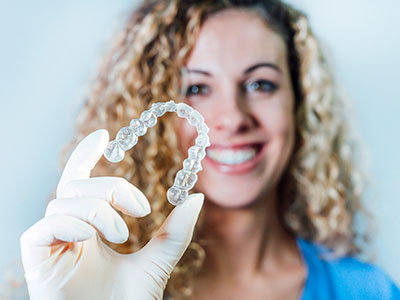
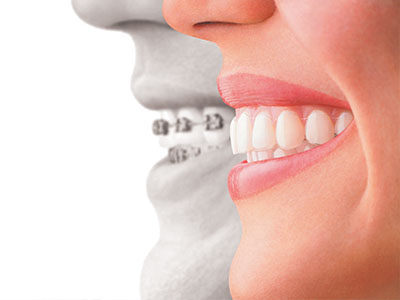
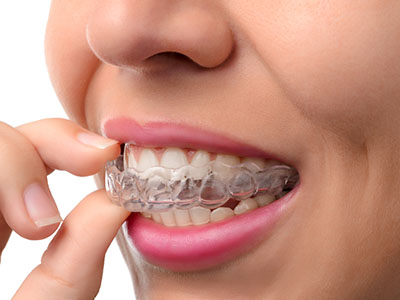
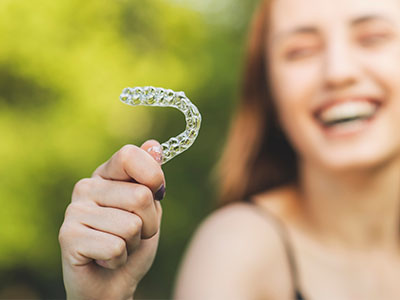
Invisalign® offers a contemporary alternative to traditional braces: clear, custom-made aligners that move teeth gradually while letting patients maintain a natural appearance and daily routine. For many adults and teens, this system blends proven orthodontic principles with modern digital planning to deliver predictable, discreet results.
Useful Invisalign® Resources
Because aligner therapy combines clinical decision-making with patient habits, it helps to understand both the technology and the day-to-day experience. Below we outline how Invisalign® works, what to expect during treatment, and how the process is managed from the initial scan to the final retainer phase.
This page focuses on the practical and clinical aspects of treatment so you can make an informed decision. If you have questions specific to your smile, our team at Clarksburg Dental Center can evaluate your needs and discuss whether clear aligners are a good fit for your goals.
Why Patients Opt for Clear Aligners
Clear aligners appeal to patients who want orthodontic correction without the visual impact of metal brackets. The aligners are made from smooth, BPA-free plastic and fit snugly over the teeth, which reduces irritations that can occur with traditional appliances. Since the aligners are removable, patients keep control over eating and oral hygiene throughout treatment.
Beyond aesthetics, aligners offer clinical versatility. With advances in attachment design and software-driven tooth movement, Invisalign® can address a wide range of alignment issues — from mild crowding to moderate spacing and certain bite concerns. Treatment planning accounts for tooth movement in small, controlled steps to achieve predictable results.
Choosing aligners still requires commitment: wearing them for the recommended daily hours and following the prescribed schedule are essential. When used as directed and monitored by a dental professional, aligners can produce outcomes comparable to other orthodontic methods while offering added convenience and discretion.
The Digital-First Treatment Roadmap
Modern aligner therapy starts with a highly precise digital impression. Instead of traditional molds, a quick intraoral scan captures the contours of the teeth and bite, creating a detailed 3-D model. This digital record is the foundation for mapping tooth movement across each stage of treatment.
Using computer-aided design, the clinician and lab collaborate to create a step-by-step plan that sequences tooth movements. The result is a series of custom aligners manufactured to apply gentle force in ways that guide teeth toward their planned positions. Patients often receive a preview of the projected outcome, which helps set realistic expectations about the treatment timeline and milestones.
Digital scanning and 3‑D planning let clinicians design a personalized sequence of aligners tailored to your smile.
Because the treatment plan is digital, adjustments can be simulated and, when necessary, refinements can be made mid-course. This digital workflow increases precision in predicting how teeth will move and shortens the time spent in the chair for impressions and adjustments.
Throughout the process, the treating clinician monitors progress and confirms that tooth movement aligns with the plan. Periodic check-ins are typically brief and focused, allowing the care team to make small corrections or provide additional aligners to refine the result.
Living Normally Throughout Treatment
One of the primary benefits of clear aligners is their flexibility. Aligners are designed to be removed for meals and important events while remaining comfortably in place for most waking hours. This removability helps patients maintain normal eating habits and simplifies oral hygiene because brushing and flossing are not impeded by fixed hardware.
Aligners should be worn according to the schedule recommended by your provider—typically close to 20–22 hours per day—to ensure consistent progress. For many patients, the ability to remove aligners briefly for cleaning or social occasions is a major advantage that encourages adherence and satisfaction during treatment.
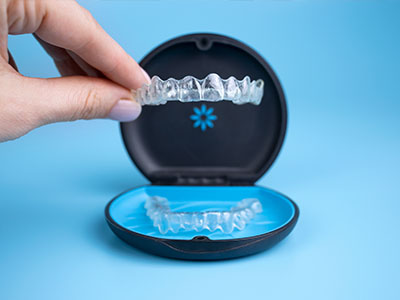
Daily wear does require routine care: aligners should be cleaned regularly and returned to their case when not in use to avoid loss or damage. Patients also appreciate that the aligners produce less soft-tissue irritation, which often translates to increased comfort compared with traditional braces.
What to Expect During Appointments
Your initial consultation will include a clinical exam and a conversation about goals and expectations. If aligner therapy is appropriate, the next step is a comprehensive digital scan and a personalized treatment plan. This visit is an opportunity to see a simulation of the anticipated outcome and to ask about the practical aspects of wearing aligners.
Subsequent visits are typically shorter than conventional orthodontic appointments. They focus on monitoring progress, exchanging sets of aligners as needed, and addressing any questions about routine care. Because the treatment is driven by a planned sequence of aligners, many checkups are brief and predictable.
At the end of active aligner therapy, a retention phase preserves the new tooth positions. Your clinician will explain retainer options and the recommended schedule to help protect your investment in the result. Consistent follow-up supports long-term stability and helps catch any minor shifts early.
Initial evaluation and treatment design
We begin with an in-depth assessment of alignment, bite, and oral health. A digital scan replaces traditional impressions and becomes the blueprint for your customized plan.
Precision scanning and visualization
The 3‑D model allows you to preview projected results and gives your clinician the data needed to sequence tooth movements with control and predictability.
Custom aligners crafted for comfort
Each aligner is formed to fit your teeth precisely and applies gentle, targeted pressure. Comfort considerations are built into the design to support daily wear.
Custom aligners crafted for comfort
Each aligner is formed to fit your teeth precisely and applies gentle, targeted pressure. Comfort considerations are built into the design to support daily wear.
Clinical Benefits and Safety Considerations
When delivered by a licensed dental professional, aligner therapy is a controlled form of orthodontic movement with a strong safety profile. Treatment planning is individualized to avoid placing harmful forces on teeth or compromising periodontal health. A thorough exam before starting treatment ensures that aligners are appropriate for a patient’s particular dental and gum health.
Invisalign® is capable of addressing many alignment needs, and adjunctive procedures (such as attachments or interproximal reduction) are sometimes recommended to achieve optimal outcomes. Your clinician will discuss any additional techniques that may enhance tooth movement while prioritizing long-term oral health.
Ongoing monitoring helps detect potential issues early. If periodontal concerns, decay, or other complications arise, the treatment plan can be adapted. This collaborative approach between patient and clinician supports safe, effective progress toward a healthier, more functional smile.
For those who value discretion and a treatment path guided by precise planning, clear aligners present a modern option with a strong record of success when managed by an experienced dental team.
Patient Education Videos
Watch short videos that explain the aligner process, demonstrate fit and care, and describe what to expect during treatment.
*Invisalign® is a registered trademark of Align Technology, Inc.
With careful planning and consistent follow‑through, Invisalign® can be an effective pathway to a well-aligned, healthy smile. If you’d like to learn more about how clear aligner therapy might work for you, contact Clarksburg Dental Center for additional information and to schedule a consultation.